
The Future is Now · 2026-10-19
The era of the weekly grocery haul is over.
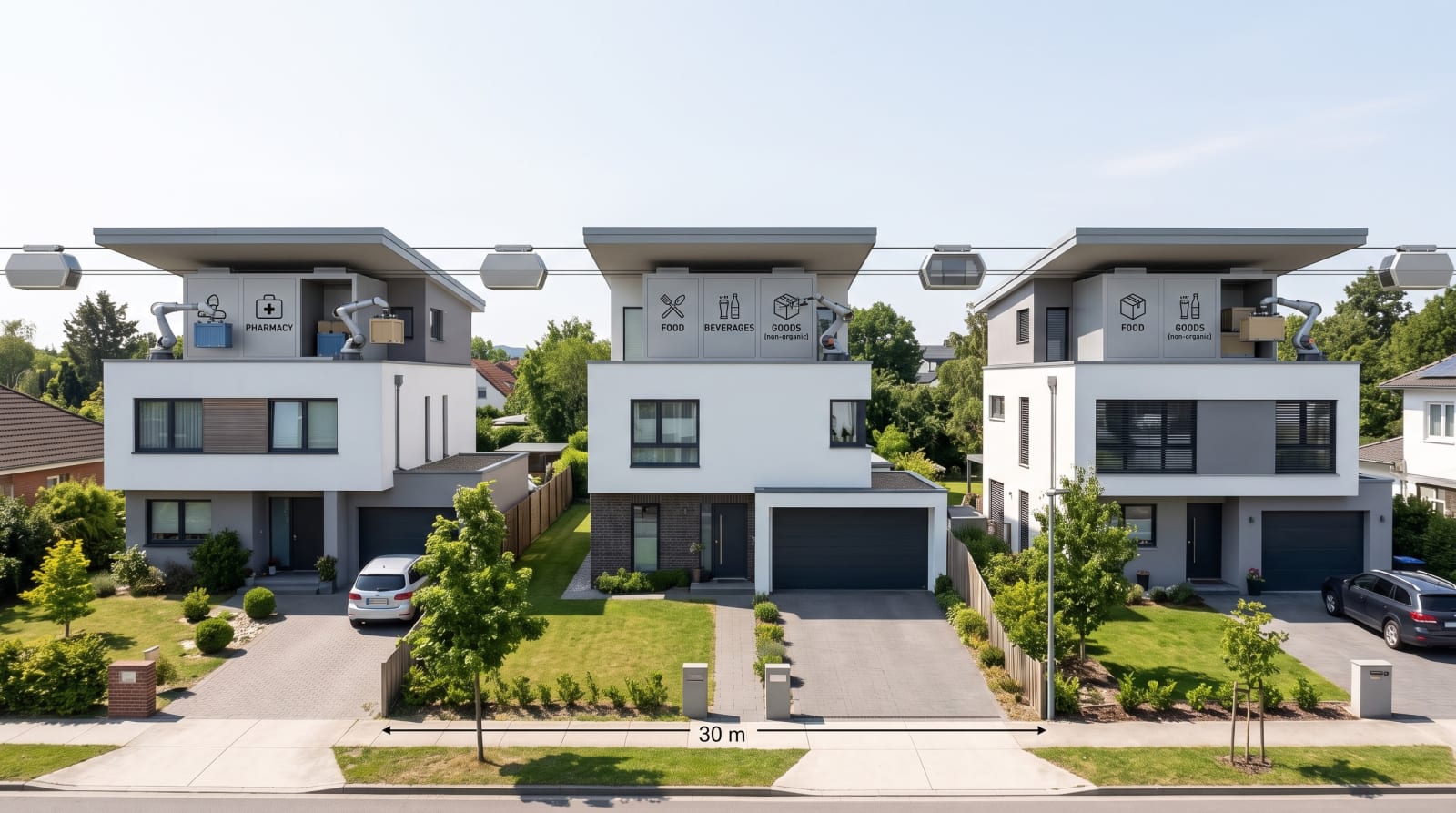
Retail is moving from centralized megastores to decentralized, hyper-local neighborhood dispatch centers. These automated hubs predict and receive daily food and weekly goods based purely on the specific consumption trends of the surrounding streets.
Here is how the new local sharing and shopping ecosystem operates:
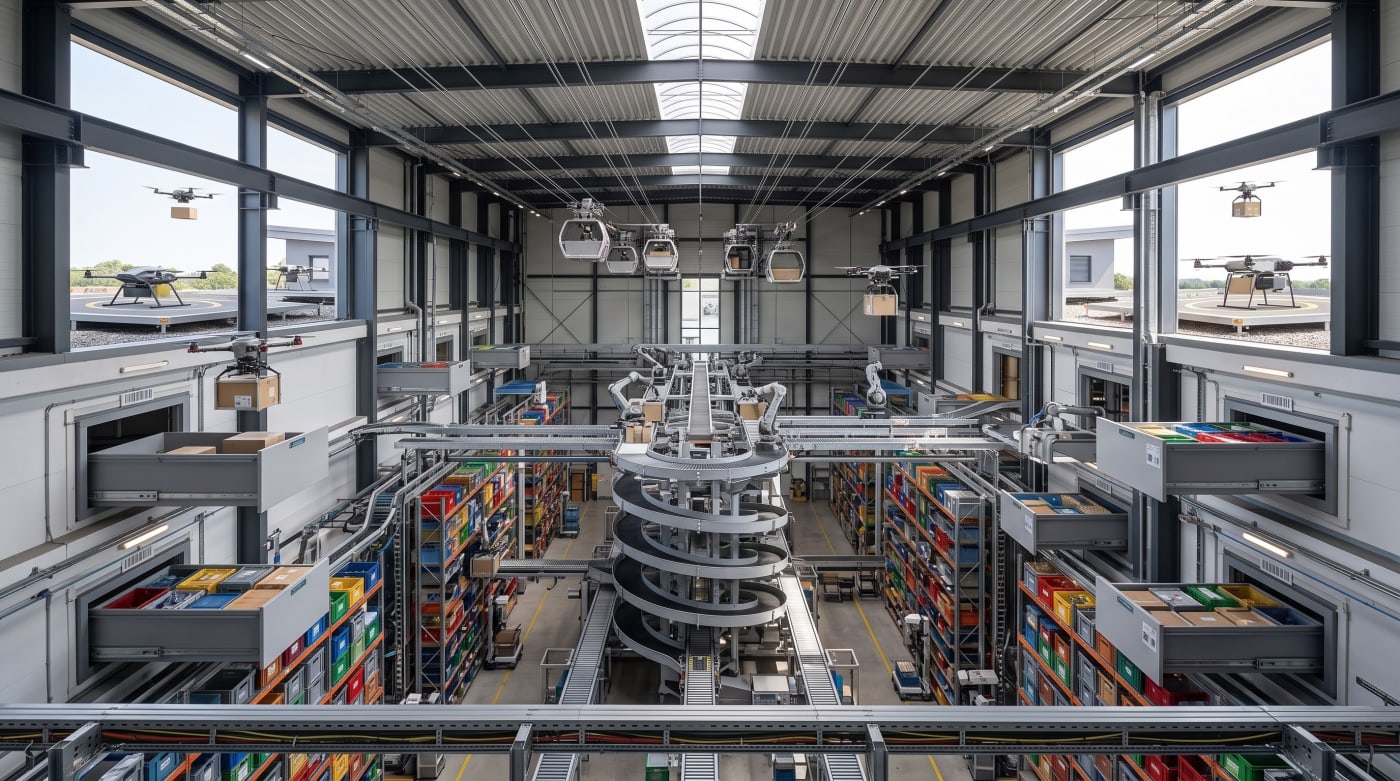
- Automated Restocking: Supermarkets no longer rely entirely on foot traffic. Instead, they deploy autonomous trucks and heavy-lift drones to bulk-deliver inventory directly to your local neighborhood dispatch center.
- Cabled Micro-Delivery: From the local dispatch center, food and goods travel to individual homes via a continuous network of cabled drones.
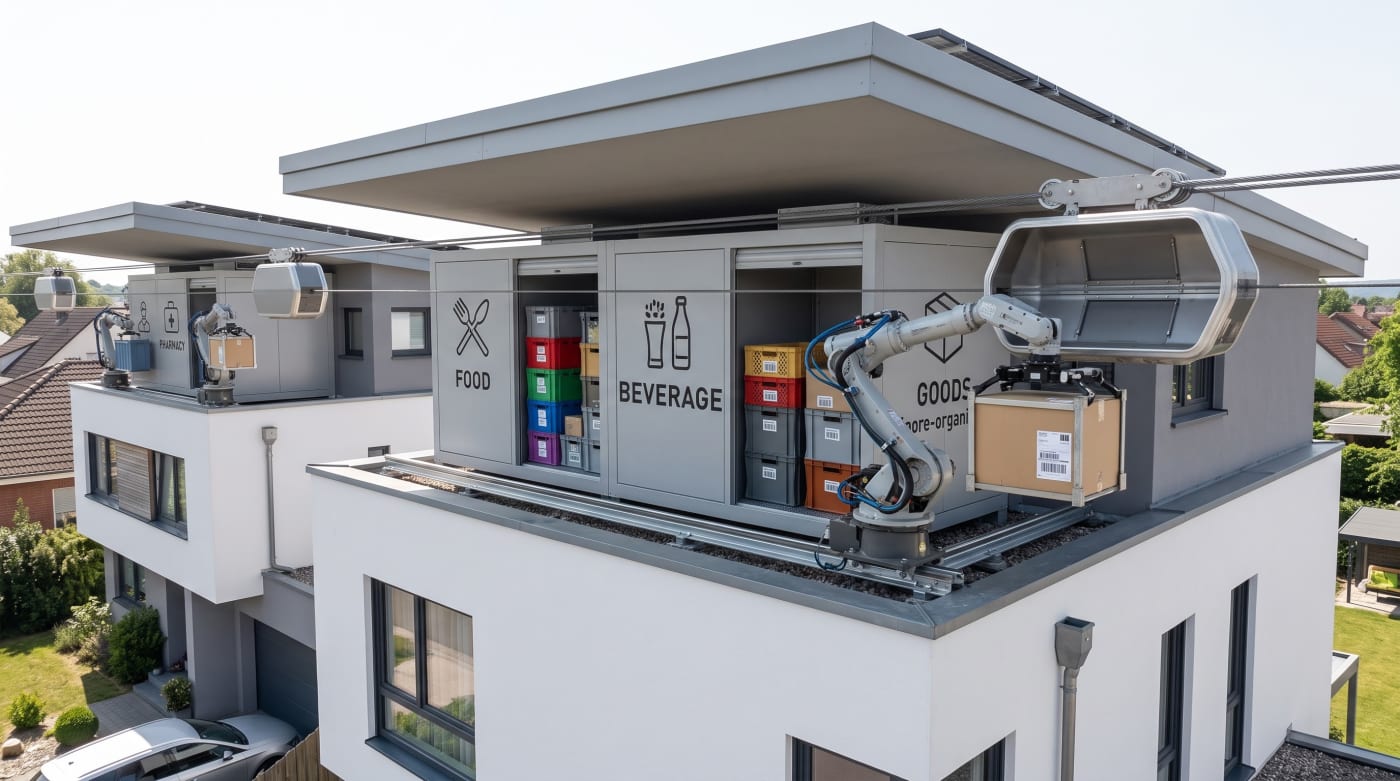
- The Home Ceiling Robot: Inside the home, a ceiling-mounted robotic arm receives the payload directly from the automated dispatch-pod, organizing the goods seamlessly into the family's intelligent storage walls.
- Dynamic Billing & Returns: Your kitchen knows your meal prep schedule. If a family’s recipe plans change and consumption of a certain item drops, the ceiling robot packs the unused ingredients back into the pod. The food is sent back to the dispatch center, and the family is strictly charged only for what they actually consumed.
- Neighborhood-to-Neighborhood Trading: Dispatch centers operate as autonomous trading floors. If one neighborhood has a surplus of a product and another faces a shortage, the centers communicate and trade with each other automatically based on attractive pricing. As AI agent adoption accelerates across global supply chains—with 38% of organizations already running 100+ automated agents in production today—these decentralized networks operate with near-perfect efficiency.
- Families as Micro-Merchants: The consumer is now an active market participant. Families can purchase bulk or specialty goods, hold them in their automated home storage, and sell them back into the neighborhood system later for cash if they want to offload inventory.
We are shifting from static consumers to dynamic nodes in a living, breathing supply chain. Your home is no longer just a place to store groceries. It is a smart micro-warehouse, an active participant in local commerce, and the ultimate tool for zero-waste living.
Are you ready to let your house negotiate your grocery budget?
#SupplyChain#FutureOfRetail#DecentralizedEconomy#SmartCities#Logistics#Automation#CircularEconomy#Robotics